

AOD-9604
$58.00
Description
Product Summary – AOD-9604 – Fragment of hGH
| Field | Details |
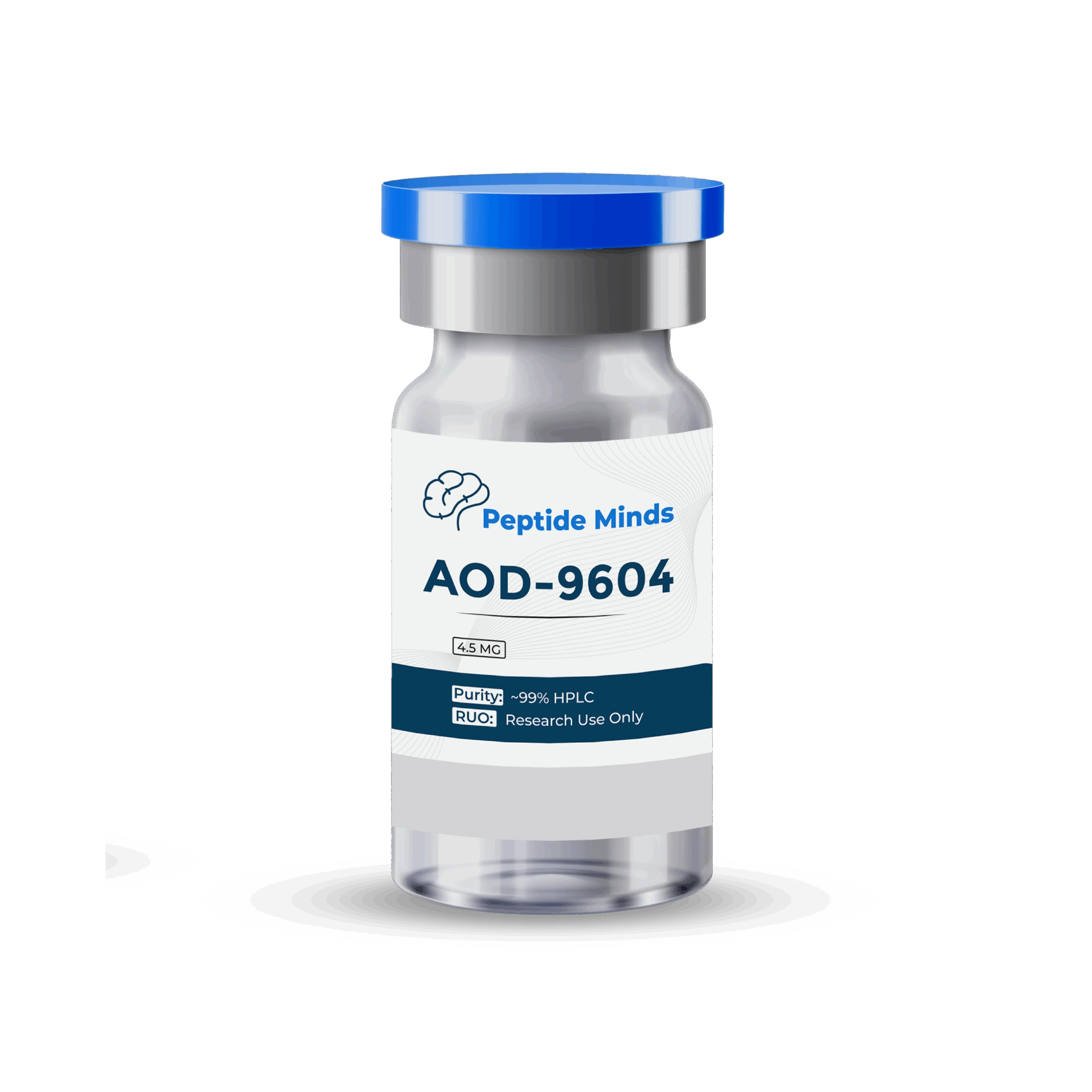
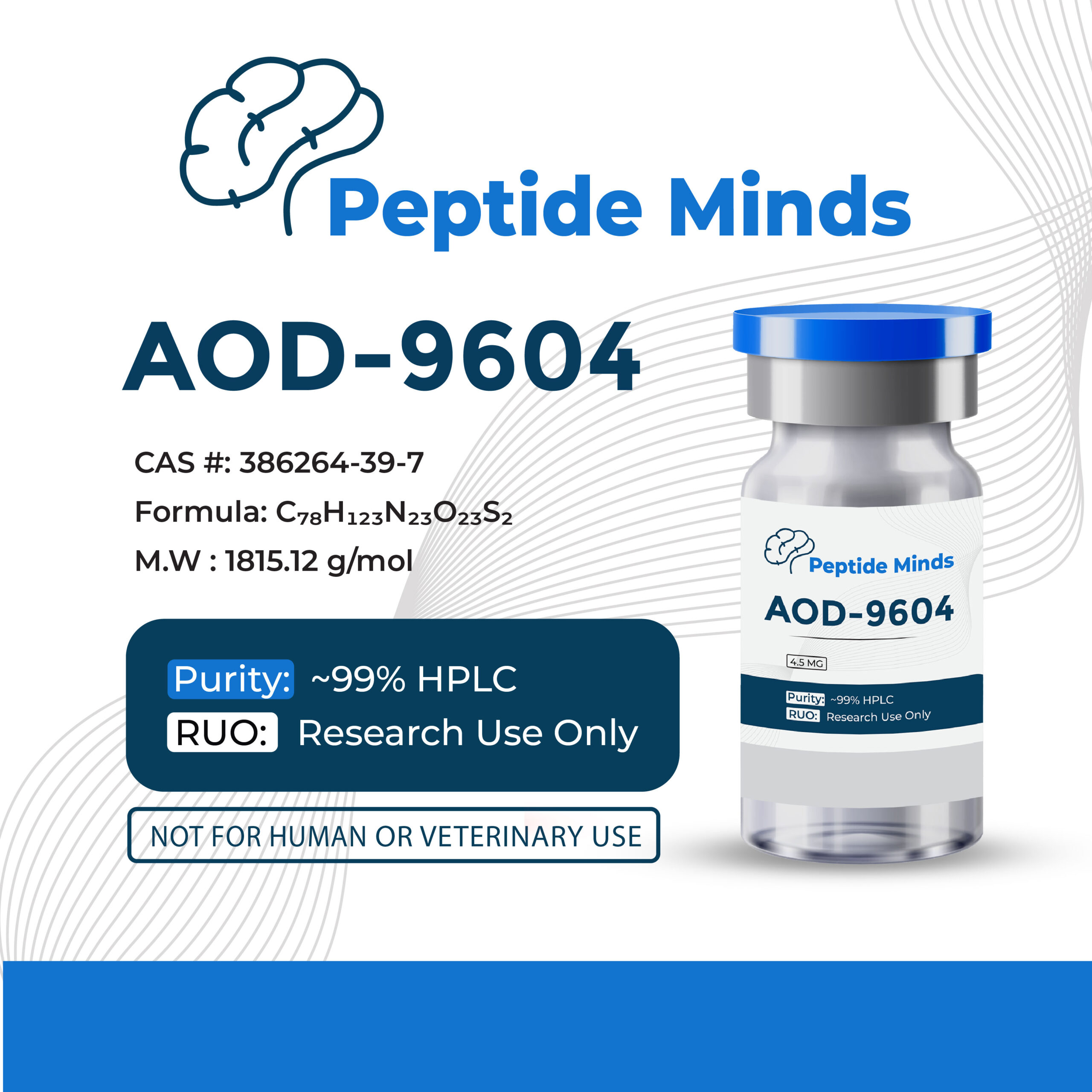
| Product Name | AOD-9604 |
| Category | Synthetic peptide fragment; Tyr-hGH 177–191 analogue (hGH residues 177–191 with an additional N-terminal Tyr) |
| Molecular Formula | C₇₈H₁₂₃N₂₃O₂₃S₂ |
| Molecular Weight | ~1,814 g/mol |
| Length | 16 amino acids |
| Form & Purity | Lyophilized powder, ≥95% purity (HPLC-verified) |
| Storage | These are typical peptide handling specs; acceptable as supplier guidance |
| Key Mechanisms | – Mimics the lipolytic region of hGH without IGF-1-related growth effects
– Enhances β-adrenergically stimulated lipolysis and inhibits lipogenesis in adipose tissue – No effect on blood glucose or insulin sensitivity at therapeutic doses |
| Research Use Cases | – Obesity and metabolic disorder models
– Fat mass reduction studies – Energy balance, mitochondrial activity, and lipid metabolism – Musculoskeletal research (cartilage protection, osteoarthritis models) |
| Common AEs | – Generally well tolerated in published studies
– Reported effects include mild headache, transient GI discomfort, or injection site reactions – No evidence of promoting tumor growth (unlike native hGH) |
| Compliance | For research use only. Not for human or veterinary use. |
Molecular Profile
Amino Acid Sequence of AOD-9604
Tyr-Leu-Arg-Ile-Val-Gln-Cys-Arg-Ser-Val-Glu-Gly-Ser-Cys-Gly-Phe
Structural Modifications of AOD-9604
- Fragment of the C-terminal region of hGH, selected because it retains lipolytic activity without growth-promoting effects
- Two cysteine residues (Cys^7 and Cys^14) form an intramolecular disulfide bond, → stabilizes the fragment’s secondary structure
- No IGF-1 induction → avoids risks of hyperplasia or tumor growth associated with full-length hGH
Half-life of AOD-9604
Very short systemic half-life (minutes) in animal/serum studies; no peer-reviewed human SC half-life published.
clinical trials, and
Mechanism of Action of AOD-9604
AOD-9604 increases adipocyte lipolysis by enhancing the adipocytes’ sensitivity to catecholamines rather than acting as a classical GH-receptor agonist. Multiple rodent models have explained the increase in isoproterenol- or beta-adrenergic-stimulated glycerol, attributed to the increased expression or activity of lipolytic enzymes, through the use of the AOD-9604 peptide. AOD-9604 peptide increases the net triglyceride hydrolysis in white adipose tissue by amplifying β-adrenergic signaling and antilipogenic programs in adipose tissue.
Weight Loss Peptide for Obesity Research
AOD-9604 reduces lipogenesis and increases fatty acid oxidation at the tissue level. In obese rodents treated with AOD-9604, the researchers observed not only a reduction in adipose mass but also an increase in fatty acid oxidation markers. Some studies also explained the increased expression of genes associated with mitochondrial fatty acid oxidation. [2]
Other Metabolic Health Potential
In vitro and small animal studies claimed the anabolic or modulatory effects of AOD-9604 in the osteoblasts. Although the human data is limited, it has also been experimentally tested in cartilage repair and joint disease models in rodents. The proposed mechanism involves the direct stimulation of osteoblastic activity and matrix synthesis through local paracrine or autocrine signalling pathways. [3]
AOD-9604 Clinical Trials & Weight Loss
In a 12-week randomized clinical trial, participants taking 1 mg daily of AOD-9604 lost about 2.6–2.8 kg, as compared to the 0.8 kg loss of the placebo group. [4]
At first, AOD-9604 showed some promise with moderate weight loss over 12 weeks at low doses. However, when researchers extended trials or increased the dose, it didn’t work as expected. Ultimately, the longer trial failed, and development was stopped.
Tolerability and Safety Considerations
- Mild AEs such as headache, transient GI upset, and injection-site reactions, but no consistent serious adverse events were reported.
- Long-term carcinogenicity/reproductive data are lacking; FDA highlights risks with compounded/non-GMP sources.
- Listed in anti-doping frameworks, sensitive urine assays now exist to monitor misuse.
Citations
- Heffernan, M., Summers, R. J., Thorburn, A., Ogru, E., Gianello, R., Jiang, W. J., & Ng, F. M. (2001). The effects of human GH and its lipolytic fragment (AOD9604) on lipid metabolism following chronic treatment in obese mice and beta(3)-AR knock-out mice. Endocrinology, 142(12), 5182–5189. https://doi.org/10.1210/endo.142.12.8522
- Wu, Z., & Ng, F. M. (1993). Antilipogenic action of the synthetic C-terminal sequence 177-191 of human growth hormone. Biochemistry and molecular biology international, 30(1), 187–196
- Valentino, M. A., Lin, J. E., & Waldman, S. A. (2010). Central and Peripheral Molecular Targets for Anti-Obesity Pharmacotherapy. Clinical Pharmacology and Therapeutics, 87(6), 652. https://doi.org/10.1038/clpt.2010.5
Third Party Verified
5 MG – ADLY515 – 05/29/25 (Current)
5 MG – XMHM7GGRUV – 06/06/2024
Additional information
| Quantity | 1 VIAL, 2 VIALS, 5 VIALS, 10 VIALS |
|---|---|
| Size | 5 MG |


Reviews
There are no reviews yet.