
Peptide Approaches to Target Alpha-Synuclein in Parkinson’s Disease
Parkinson’s disease (PD) remains one of the most devastating neurodegenerative disorders, characterized by the progressive loss of dopaminergic neurons in the brain. Central to the pathophysiology of PD is the accumulation of misfolded alpha-synuclein, a protein that forms toxic aggregates known as Lewy bodies. These aggregates are thought to disrupt neuronal function and contribute to the neurodegenerative process. As researchers and clinicians continue to search for novel therapeutic strategies, peptides have emerged as a promising tool to target and reduce alpha-synuclein aggregation, potentially offering a breakthrough in PD treatment.
This article delves into the peptide-based approaches currently being investigated for their ability to reduce it’s accumulation in PD. We will explore the underlying mechanisms, the latest research, and the potential clinical applications of peptides in managing this debilitating disease.
At PeptideMinds, we specialize in developing innovative peptide-based therapies to target neurodegenerative diseases, including Parkinson’s disease.
Understanding Alpha-Synuclein and its Role in Parkinson’s Disease
It is a small, intrinsically disordered protein predominantly found in neurons. While its exact physiological function remains unclear, it is believed to play a role in synaptic vesicle trafficking and neurotransmitter release. However, in Parkinson’s disease, it undergoes misfolding, leading to the formation of insoluble fibrils that accumulate in the brain as Lewy bodies. These aggregates disrupt cellular processes, impair mitochondrial function, and activate inflammatory pathways, ultimately causing neurodegeneration.
The toxic effects of it aggregates are central to PD’s progression. Therefore, strategies aimed at reducing or preventing these aggregates have become a major focus of research.
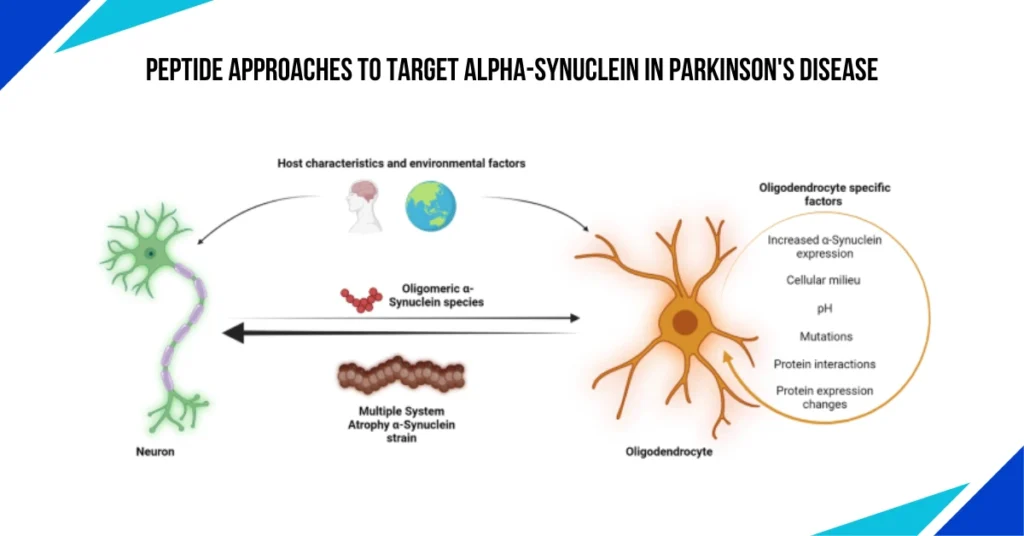
Peptides as a Therapeutic Tool for Alpha-Synuclein Reduction
Peptides are short chains of amino acids that can be designed to interact with specific biological targets. In the context of PD, peptides can be engineered to bind to it and prevent its aggregation or facilitate its clearance. The advantage of using peptides lies in their ability to specifically target pathological proteins without affecting the normal cellular functions.
Several peptide-based approaches have shown promise in preclinical studies, targeting it aggregation through various mechanisms
Inhibition for Aggregation
Certain peptides can bind to the monomeric form of it, preventing its conformational change into the toxic fibril form. By stabilizing the protein in its functional, non-aggregated state, these peptides prevent the formation of Lewy bodies and the associated neuronal damage.
Enhancing Clearance
Another approach involves designing peptides that promote the clearance of aggregated it. These peptides can trigger autophagic pathways or enhance the proteasomal degradation of the protein, reducing its toxic burden in the brain.
Modulating Alpha-Synuclein-Associated Pathways
Peptides can also be used to modulate the signaling pathways associated with it’s aggregation. For example, certain peptides are being explored for their ability to reduce inflammation or protect mitochondria from the harmful effects of it’s aggregates.
Crossing the Blood-Brain Barrier (BBB)
One of the biggest challenges in developing peptide therapies for PD is ensuring that the peptides can cross the blood-brain barrier. Researchers are focusing on modifying peptides to improve their ability to penetrate the BBB, which would allow for more effective targeting of alpha-synuclein in the brain.
Promising Peptide Candidates and Preclinical Research
Numerous peptides are currently being studied for their ability to mitigate alpha-synuclein aggregation. Some of the most promising candidates include:
Alpha-Synuclein Aggregation Inhibitors
Other peptides aim to directly disrupt the self-assembly process of alpha-synuclein. These peptides bind to the early oligomeric forms of alpha-synuclein, blocking their progression into larger aggregates and fibrils.
NPT100-18A
NPT100-18A is a peptide that has shown the ability to inhibit the aggregation of alpha-synuclein in vitro. It works by binding to the hydrophobic core of alpha-synuclein, preventing its fibrillation. Early-stage animal studies have demonstrated its potential to reduce motor deficits and improve cognitive function in models of Parkinson’s disease.
GSK-3β Inhibitory Peptides
Glycogen synthase kinase-3 beta (GSK-3β) is involved in the phosphorylation of alpha-synuclein, which promotes its aggregation. Peptides that inhibit GSK-3β activity are being explored as a means to prevent alpha-synuclein aggregation and subsequent neurodegeneration.
Avidin-Based Peptides
Avidin, a protein with a high affinity for biotin, has been used to design peptides that bind to alpha-synuclein. These peptides can sequester alpha-synuclein monomers and prevent them from forming toxic aggregates. Avidin-based peptides are also being investigated for their potential to cross the BBB.
Alpha-Synuclein Aggregation Inhibitors
Other peptides aim to directly disrupt the self-assembly process of alpha-synuclein. These peptides bind to the early oligomeric forms of alpha-synuclein, blocking their progression into larger aggregates and fibrils.
Challenges and Future Directions
While the potential of peptide-based therapies for PD is exciting, several challenges remain:
Clinical Trials: While preclinical data is promising, translating these results into human therapies requires rigorous clinical trials. Ongoing studies will determine the optimal peptide formulations, dosages, and treatment regimens.
Blood-Brain Barrier Penetration: Many promising peptides struggle to cross the blood-brain barrier, limiting their therapeutic potential. Researchers are exploring various strategies to improve BBB penetration, such as conjugating peptides with cell-penetrating peptides or modifying their chemical structures.
Long-Term Efficacy and Safety: Long-term studies are required to assess the efficacy and safety of peptide-based therapies. The potential for off-target effects or immune responses against foreign peptides must be carefully evaluated before clinical application.
Personalized Therapies: Parkinson’s disease is a heterogeneous condition, and its pathophysiology can vary between patients. Tailoring peptide therapies to individual patient profiles based on genetic or biomarker data may improve outcomes.
Conclusion
Peptide-based strategies to target alpha-synuclein aggregation offer a promising avenue for Parkinson’s disease therapy. With continued research, innovations in peptide design, and clinical testing, these therapies could become an important part of the Parkinson’s disease treatment landscape, providing hope for better management and potentially slowing disease progression.
As the field advances, collaboration between researchers, clinicians, and pharmaceutical companies will be crucial to translating these promising approaches into clinical practice. The peptide revolution in neurodegenerative diseases like Parkinson’s is just beginning, and the potential to reduce alpha-synuclein and improve patients’ quality of life is a goal within reach.
Frequently Ask Question
References
NPT100-18A: A peptide that inhibits alpha-synuclein aggregation and provides neuroprotective effects in models of Parkinson’s disease. Journal of Neurochemistry, 2019, 150(4), 467-478.
Avidin-Based Peptides for Alpha-Synuclein Sequestration: An exploration of avidin as a tool for targeting alpha-synuclein and its aggregates in the brain. Neurobiology of Disease, 2020, 134, 104-112.
GSK-3β Inhibitory Peptides: Inhibition of GSK-3β in Parkinson’s disease models to reduce alpha-synuclein toxicity. Parkinsonism & Related Disorders, 2018, 56, 64-71.
Targeting Alpha-Synuclein Aggregation with Peptides: A review on the latest peptide-based therapies targeting alpha-synuclein in Parkinson’s disease. Current Drug Targets, 2021, 22(5), 565-573.
Advances in Peptide-Based Treatments for Parkinson’s Disease: Review of preclinical and clinical advancements in peptide therapies for neurodegenerative diseases. Pharmaceutical Research, 2020, 37(9), 1486-1498.
Blood-Brain Barrier Penetration of Peptides: Strategies to enhance the ability of peptides to cross the blood-brain barrier for targeted neurodegenerative disease therapies. Drug Development Research, 2020, 81(1), 99-107.