
cGMP Peptides: Essential Insights for GMP Compliance in Peptide Drug Quality Control
In the ever-evolving world of peptide-based drugs, ensuring that these therapeutics meet rigorous standards is crucial. One of the key regulatory frameworks that govern the production of these peptides is cGMP (current Good Manufacturing Practice). This set of regulations helps ensure that the peptides used in drug development and therapy are of the highest quality and consistency. But what exactly is cGMP, and how does it impact the synthesis and quality control of peptide drugs? Let’s dive into this essential topic for doctors, researchers, and pharmaceutical professionals. For more information on peptide research and innovations, visit Peptide Minds to explore cutting-edge developments in peptide therapies.
What Are cGMP Peptides?
cGMP Peptides refer to peptides that are synthesized and manufactured under current Good Manufacturing Practice (cGMP) regulations. These peptides are used in various pharmaceutical and therapeutic applications, from cancer treatment to hormone replacement therapy. The strict adherence to cGMP ensures that these peptides are produced with the highest level of quality, safety, and efficacy.
Peptide synthesis under cGMP standards involves rigorous protocols designed to ensure that each peptide is consistent in its structure, potency, and purity. These standards are enforced by regulatory bodies such as the FDA and EMA, which oversee the manufacturing and distribution of pharmaceuticals.
The Importance of cGMP in Peptide Drug Quality Control
Ensuring Safety and Efficacy: cGMP compliance is primarily about protecting patients. By adhering to these stringent regulations, manufacturers ensure that each batch of peptide drugs is free from contamination and maintains the necessary potency to achieve its therapeutic effects. This is especially important in peptide therapies, where slight variations in peptide sequences or purity can lead to significant differences in treatment outcomes.
Quality Consistency: Peptides must be synthesized with precise chemical integrity. The cGMP framework ensures that peptide production is consistent across all batches, eliminating variability that could affect the drug’s performance. This consistency is vital for researchers and doctors who depend on predictable results in clinical settings.
Traceability and Documentation: One of the hallmarks of cGMP compliance is detailed record-keeping. Each step of the peptide production process, from raw material sourcing to final packaging, must be documented. This traceability ensures accountability and allows for thorough investigations if there are any issues with the quality or safety of the final product.
Inspection and Audits: cGMP-compliant manufacturers are subject to regular inspections and audits by regulatory authorities. These inspections ensure that manufacturers are consistently following the necessary guidelines to produce safe and effective peptide drugs. For researchers, this adds an extra layer of confidence that the peptides they are working with have been thoroughly vetted for quality control.
cGMP vs. GMP: What They Are and How They Differ
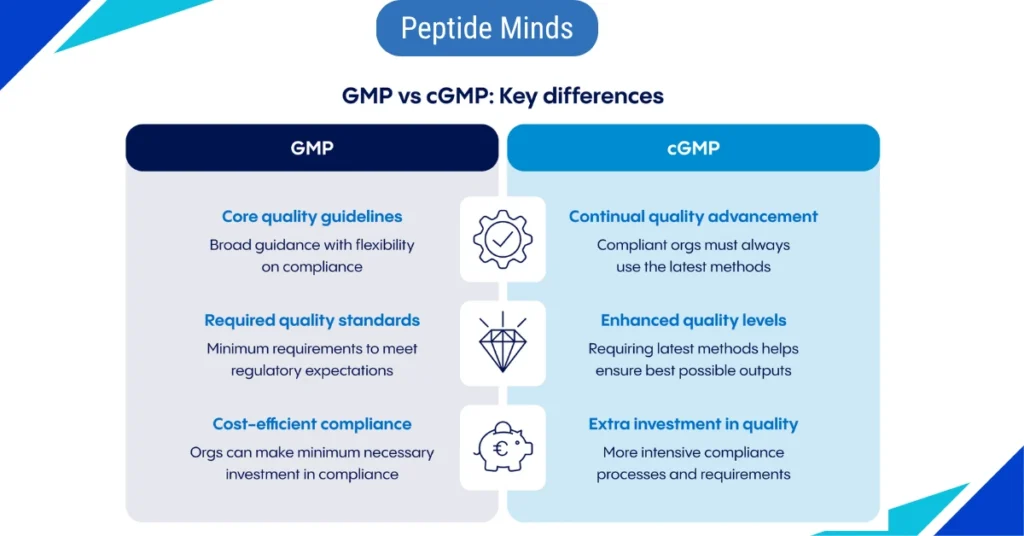
While both Good Manufacturing Practice (GMP) and current Good Manufacturing Practice (cGMP) aim to ensure the quality and safety of pharmaceutical products, the key difference lies in the term “current.” cGMP emphasizes the need for continuous updates and incorporates the latest technological advancements and regulatory standards into manufacturing practices. In contrast, GMP provides a foundational set of guidelines, but it doesn’t explicitly require staying current with modern techniques. Essentially, cGMP ensures that manufacturers adopt up-to-date practices, technology, and scientific advancements, making it a more dynamic approach to ensuring product quality.
Key Considerations for GMP Compliance in Peptide Synthesis
Raw Material Sourcing: The quality of raw materials used in peptide synthesis is crucial. cGMP requires that all raw materials, including amino acids and reagents, be sourced from approved vendors who follow quality assurance practices. This minimizes the risk of impurities entering the peptide chain during synthesis.
Process Control and Validation: Peptide synthesis under cGMP includes strict process controls to ensure consistency and reproducibility. Every stage of the production process, from solid-phase peptide synthesis (SPPS) to purification and final formulation, must be validated to demonstrate that the process consistently produces peptides of the required quality.
Final Quality Control: After synthesis, peptides undergo a series of analytical tests to ensure they meet the necessary specifications. These tests include high-performance liquid chromatography (HPLC), mass spectrometry (MS), and other analytical methods to assess the peptide’s identity, purity, and concentration. cGMP compliance requires that these tests be performed by qualified personnel using validated equipment.
Packaging and Storage: Proper packaging and storage are also critical for maintaining peptide quality. Peptides can be sensitive to environmental factors such as temperature, light, and humidity. cGMP requires that peptides be stored under controlled conditions to prevent degradation and ensure their stability.
Conclusion
The synthesis of cGMP Peptides is not just about meeting regulatory requirements—it’s about ensuring the safety, efficacy, and consistency of peptide-based therapeutics. For doctors, researchers, and pharmaceutical professionals, understanding the importance of cGMP compliance is crucial in ensuring that the peptide drugs they work with meet the highest standards of quality. By adhering to these guidelines, we can continue to unlock the potential of peptides in treating a wide range of diseases while safeguarding patient health. For a deeper dive into high-quality peptide products, explore our extensive range at Peptide Minds. Discover how our peptides can support your research and therapeutic needs.
Frequently Asked Questions (FAQs)
References
“FDA cGMP Guidelines.” U.S. Food and Drug Administration.
“EMA Guidelines for Good Manufacturing Practice.” European Medicines Agency.
“Current Good Manufacturing Practice (cGMP) for Peptide Synthesis.” Journal of Pharmaceutical Sciences.