


In scientific research and healthcare, the quality and type of materials used play a crucial role in ensuring accurate results and patient safety. When it comes to research, development, and medical treatments, lab-grade and clinical-grade materials are two terms that often arise, but their meanings are frequently misunderstood. Understanding the difference between these two types of materials is essential for both researchers and healthcare professionals. This blog will explore the differences, uses, and significance of lab-grade and clinical-grade materials.
What Are Lab-Grade Materials?
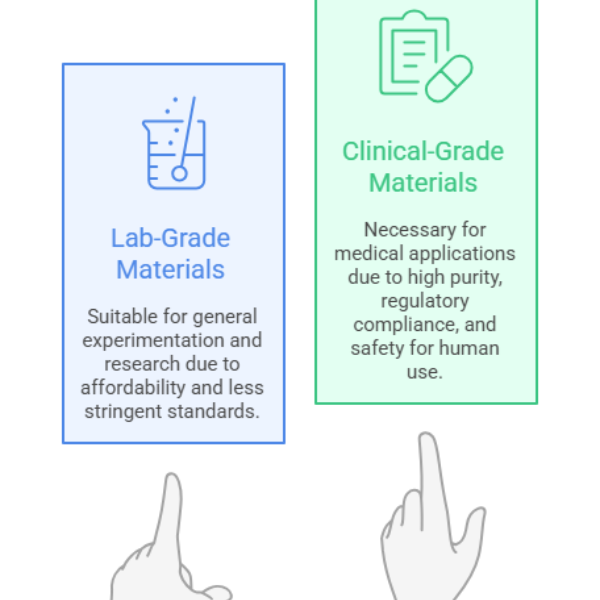
Lab-grade materials refer to substances that are designed for use in scientific research and experimentation. These materials are manufactured to meet specific standards that are sufficient for laboratory experiments, but they may not necessarily be suitable for direct human or clinical application. Common examples of lab-grade materials include chemicals, reagents, and instruments used for testing and analysis in controlled environments.
Lab-grade materials are generally evaluated for:

What Are Clinical-Grade Materials?
On the other hand, clinical-grade materials are substances or products that meet the rigorous standards required for medical treatments, diagnostics, or patient care. These materials undergo stringent testing and certification processes to ensure they are safe, effective, and suitable for use in humans. The term clinical-grade often applies to materials such as drugs, devices, and implants used in clinical trials, surgeries, or long-term treatments.
Clinical-grade materials are characterized by:
Key Differences Between Lab-Grade and Clinical-Grade Materials
1. Purity and Quality Standards
2. Regulatory Oversight
3. Applications
4. Cost
Why Does the Difference Matter?
The difference between lab-grade and clinical-grade materials is crucial because the stakes are much higher in clinical settings. Using lab-grade chemicals or materials in human applications could lead to contamination, ineffective treatments, or even harm. Clinical-grade materials, on the other hand, are specifically designed and tested for safety, effectiveness, and sterility to ensure patient safety and optimal outcomes.
Conclusion
In conclusion, lab-grade and clinical-grade materials serve different purposes in research and healthcare. Lab-grade materials are vital for research and experimentation but are not suitable for human use. In contrast, clinical-grade materials are specially designed and tested for use in human healthcare, with rigorous regulatory standards to ensure safety and efficacy. Whether you are conducting research or involved in patient care, understanding the differences between these two types of materials is essential for maintaining high standards and safety. For more info must read Peptide minds blogs