

Peptides, often referred to as the building blocks of life, are short chains of amino acids that play a crucial role in numerous biological functions. From regulating hormones and immune responses to promoting muscle growth and skin repair, peptides are fundamental to the body’s natural processes. In this article, we will explore the science behind peptides, their applications in health and medicine, and their growing popularity in the world of skincare and fitness.
Introduction of Peptides: Definition
In complete story of peptides the small peptides consist of a short chain of amino acids, 2 to 50 amino acids, which are the building blocks of proteins. These molecules play a crucial role in the control of hormones, immune reactions and healing of tissues.
Significance: Peptides are essential to many body processes such as regulating hormones, the immune system, and collagen. They are also getting popularity in bodybuilding and skin care.

Types of Peptides
Naturally Occurring Peptides: These are natural products which are generated in the body and are responsible in performing important physiological functions.
Synthetic Peptides:
Artificial peptides that are employed in research and therapy.
Bioactive Peptides:
peptides obtained as a result of food sources and possessing health-promoting properties.
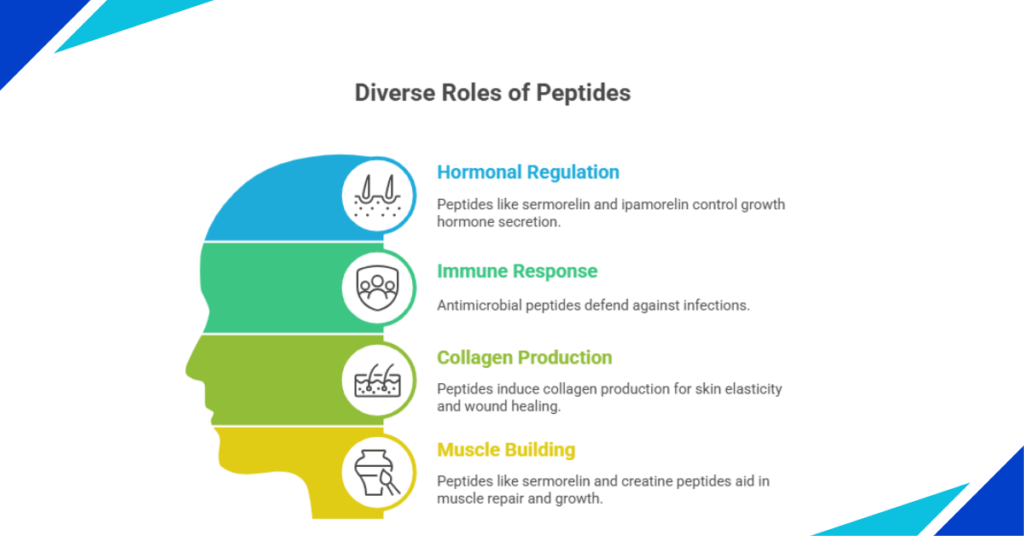
Peptides have body functions in the complete story of peptides
Hormonal Regulation:
Sermorelin and ipamorelin are peptides that control secretion of growth hormone, especially in men who need to build stronger and thinner muscles and recover faster.
Immune Response:
Antimicrobial peptides are involved in infection defense.
Production of Collagen:
There are some peptides that induce the production of collagen, thus fostering elasticity of the skin as well as healing wounds. Collagen peptides are widely used as a supplement in skin, hair, and joint enhancement.
Muscle Building:
Semorlin and other peptides such as creatine peptides are used in bodybuilding to repair and build muscle.
Health Benefits of Peptides
Anti-Aging:
The peptides have the ability to prevent wrinkle and fine lines as they stimulate the production of collagen. Cosmetic products may contain peptides that help maintain skin youthfulness.
Weight Loss:
Certain peptides aid in the process of keeping weight down by regulating the levels of blood sugar, metabolism, and appetite.
Skin Health:
Due to their ability to enhance skin hydration and elasticity, peptides are the best products to use on the skin. Do peptides work on the skin? Yes, they will help to improve texture, decrease fine lines, and stimulate the overall health of the skin.
Joint and Bone Health:
Collagen peptides aid in joint comfort and bone density, commonly applied by individuals who might experience joint problems or age-associated concerns.
Sources of Peptides
Dietary sources:
Eggs, milk, meat, fish, beans, lentils, soy, oats, flaxseed, and hemp seeds are good sources of natural peptides.
Supplements:
Collagen peptides are a well-known kind of supplement used by people who want to keep their skin elastic, their joints, and bones.
Peptides Side effects and Safety.
Are peptides safe?:
Peptides are considered to be safe when used properly. Nevertheless, peptide injections and peptide supplements are still to be treated with caution, primarily due to their dose requirement and possible side effects.
Is there a danger of peptide injections:
Peptide injections are safe when used under appropriate medical care, however, inappropriate usage may cause side effects such as infection or allergy.
Are peptides steroids?:
No, peptides are not steroids. Peptides are short chains of amino acids that aid in the regulation of the body functions, whereas steroids are man-made material that is used to imitate certain hormones such as testosterone.
Peptides in SkincareI
What are the finest peptides in the skin?:
Peptides such as copper peptides and matrixyl are widely recognized as effective stimulators of collagen synthesis and skin hydration and elastin.
Do you work with peptides containing retinol?:
Peptides may indeed be used with retinol to increase the anti-aging effects. But when you combine them, you might need to change your skincare routine to avoid irritation.
Do peptide skin injections work?
Collagen production and the texture of the skin are promoted by peptide injections, and there is some evidence that they are effective in slowing aging signs.
Bodybuilding and Muscle Recovery Peptides.
What are peptides to build body?
Peptides, such as BPC-157, CJC-1295, and ghrelin analogs are bodybuilding peptide forms that help build muscle, recover, and lose fat.
What is sermorelin ipamorelin blend peptide in men?
This is two-peptide blend that triggers growth hormone release, which helps to repair muscles, burn body fat, and feel good.
What is peptides to build body?
Bodybuilding peptides have been found useful in improving muscle mass, fat burning, and stamina. They are also able to facilitate quicker post-strenuous workouts.
Conclusion
Summary Peptides are highly flexible and important molecules that have applications in improving the condition of the skin, muscle repair, and general body processes. Since peptide is used in bodybuilding or skin rejuvenation, these molecules have become very popular.
Prospect: Research into peptides will continue to identify new potential applications in treating a variety of health conditions and promoting overall health.